

LCF x Caravan: From Soil to Cup with Gibrán Cervantes
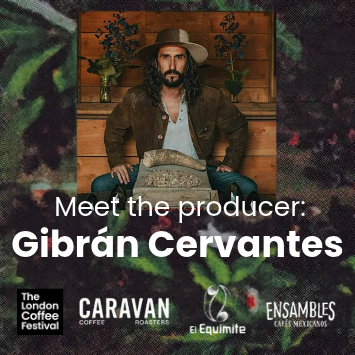
On Thursday 12 November 2026, The London Coffee Festival joined forces with Caravan Coffee Roasters to go behind the cup with Gibrán Cervantes, exploring life at El Equimite, his biodynamic coffee farm and nature reserve in Veracruz, Mexico, and how its soil, biodiversity and farming practices shape the coffee it produces.
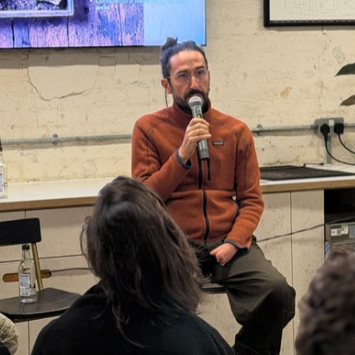
Hosted at Caravan Coffee Roasters, the evening welcomed Mexican coffee producer Gibrán Cervantes, founder of Ensambles Cafés Mexicanos and the producer behind El Equimite, his biodynamic coffee farm and nature reserve in Veracruz, Mexico.
As LCF’s Giorgio Rigali put it at the start of the evening: 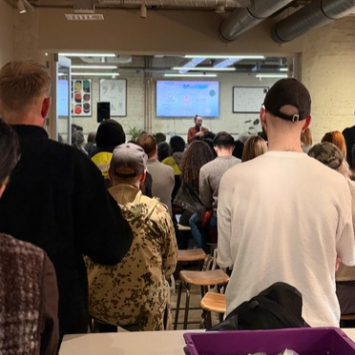
“One of the things that we love most about coffee is that there’s always something much bigger than what comes to you at the end in the cup.”
And that set the tone for the night.
Gibrán took us beyond the finished product to explore where coffee quality really begins: healthy soil, thriving ecosystems, biodiversity, farming communities and a fundamentally different relationship with the land.
Coffee as a living ecosystem
At the heart of Gibrán's approach is the idea that a coffee farm shouldn't be viewed simply as a place of production.
At El Equimite, biodynamic principles mean looking at the farm as one interconnected living organism. Soil, microorganisms, water, shade trees, plants, wildlife and people all form part of that system.
Gibrán explained:
“We treat the farm as a being, and we are part of this being... this way of working changes our mindset and the approach that we live day by day.”
 The 33-hectare farm combines specialty coffee production with conservation, permaculture design and biodiversity. More than 20 coffee varieties are grown there, alongside native shade trees, fruit trees and medicinal plants.
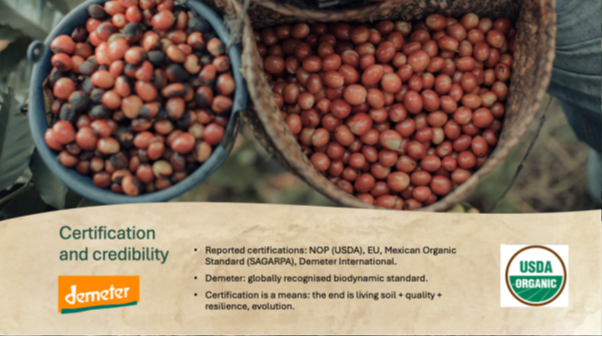
It is also Demeter-certified biodynamic, a standard Gibrán described as going beyond organic farming by focusing on the health and resilience of the entire agricultural ecosystem.
Quality starts long before the cup
One of the most powerful ideas from the evening was Gibrán's challenge to how we define coffee quality.
For him, quality isn't something that suddenly appears when coffee is processed, roasted or brewed. It begins at origin.
“We need to understand the quality from the seed, from the way that we are growing coffee, and the people involved.”
It's an idea that connects farming and flavour directly.
Gibrán spoke about the role microorganisms play in creating terroir, explaining how greater biodiversity within the soil can allow individual coffee varieties to express more complexity in the cup.
And this approach is producing remarkable coffees. El Equimite has achieved strong results at the Mexican Cup of Excellence and its coffees have been used in national and international barista competitions.
 Coffee farming in a changing climate
The audience Q&A opened up a wider conversation about one of the biggest challenges facing coffee: climate change.
Gibrán described the increasing pressures on Arabica coffee, from changing growing conditions to disease, including the devastating impact of coffee leaf rust across Mexico.
The danger, he explained, is that responding by moving towards hardier varieties grown intensively in full sun can create another problem: removing shade trees, reducing biodiversity and increasing dependence on synthetic inputs.
“The industry will face huge problems soon if we don’t start to change the paradigm of growing coffee.”
For Gibrán, building resilience means taking a whole-ecosystem approach rather than treating each problem in isolation.
Water, soil and biodiversity
Water was another major topic raised during the Q&A.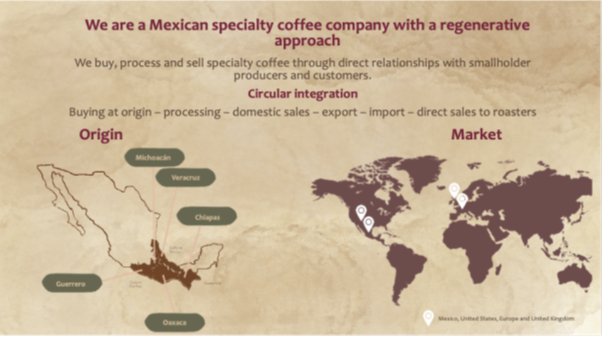
At El Equimite, the team uses Keyline design, a permaculture technique designed to slow, spread and retain water across the landscape.
With rainfall becoming more intense and less predictable, Gibrán explained that protecting soil is increasingly important. Heavy rainfall can quickly lead to erosion, taking fertile soil and water away with it.
By designing the land to hold more water and encourage infiltration into the soil, the farm is better able to cope with these changing conditions.
The same thinking underpins its approach to biodiversity. Rather than separating productive land from nature, El Equimite uses coffee production itself as part of a wider conservation system.
Changing coffee beyond one farm
But the story doesn't stop at El Equimite.
Through Ensambles Cafés Mexicanos, Gibrán and his team work across five Mexican states: Michoacán, Veracruz, Chiapas, Guerrero and Oaxaca.
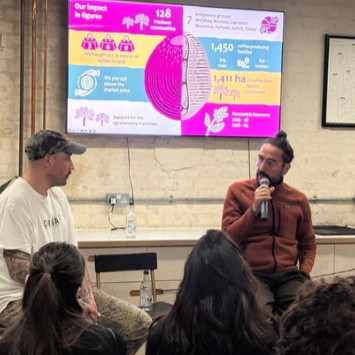 Their network reaches 128 communities and works across around 1,450 hectares, combining access to international coffee markets with technical assistance, education, financing and the transition towards more regenerative farming models.
El Equimite acts as their living laboratory. Ideas can be tested on the farm, refined and then shared with other coffee-producing communities.
As Gibrán explained:
“The coffee is the pretext to try to improve the quality of life of all the people.”
That line perhaps captured the night better than anything else.
Coffee connects farmer to roaster, café to customer and soil to cup. Protecting its future means understanding all of those relationships and recognising that quality can never be separated from the people and ecosystems that create it.
A night of coffee, conversation and community
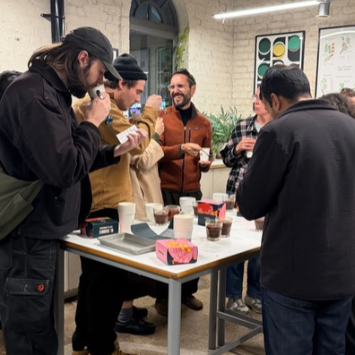
Following the discussion and Q&A, guests had the opportunity to taste coffees from El Equimite alongside upcoming Mexican coffees sourced through Ensambles, taking the conversation from the farms, practices and challenges we’d heard about to the flavours in the cup.
 A huge thank you to Jamie Strachan, Head of Coffee, and Alicia Wise, Head of Marketing, and the whole Caravan Coffee Roasters team for welcoming us; to Gibrán Cervantes for sharing his story and insights; and to everyone who joined us, asked questions, tasted some incredible coffees and made the evening what it was.
For us, this is what coffee community is about: bringing people together, sharing knowledge and getting closer to the people and stories behind the cup.
This was the first of several LCF pop-up collaborations as we build towards The London Coffee Festival in May 2027.
In 2027, we’ll launch The Green Room - a new festival destination inspired by the same spirit of discovery, where visitors can delve deeper into the origin and producer stories behind the coffees they love. Find out more here.
We’ll see you at the next one.


