)
)
Why the AI Coffee Shop Will Not Replace the Human Barista
Based on the session “Brewing the future: How AI and automation are transforming coffee businesses at scale” delivered at The London Coffee Festival, 2026.
- Speaker: Gerd Mueller-Pfeiffer, Founder and CEO, International Coffee Consulting
- Estimated read time: 8 minutes
Quick read summary
- The AI coffee shop is an operating model, not a robot, and its biggest gains are margin stability, forecasting and labour planning rather than replacing baristas.
- Volatility from tariffs, climate and labour costs is squeezing operator margins, which is precisely when automation stops being optional.
- Most AI value now sits before the cup, in grading, hedging, maintenance and pricing, rather than in the customer-facing machine.
- Gerd Mueller-Pfeiffer recommends starting with your own numbers, using demand forecasting and labour scheduling before any visible automation.
- Begin with one forecasting or inventory pilot, prove it over 90 days, then widen automation from there.
 In five years, the cost of a shipping container moving coffee climbed to $7,000, frost struck crops in Brazil and Peru, and roughly every second coffee vessel in the world began arriving five to seven days late.
Then came tariffs, which Gerd Mueller-Pfeiffer called the single largest global shock to the coffee industry in 2025. For an operator watching input costs lurch from month to month, that pile-up is the real backdrop to every conversation about artificial intelligence.
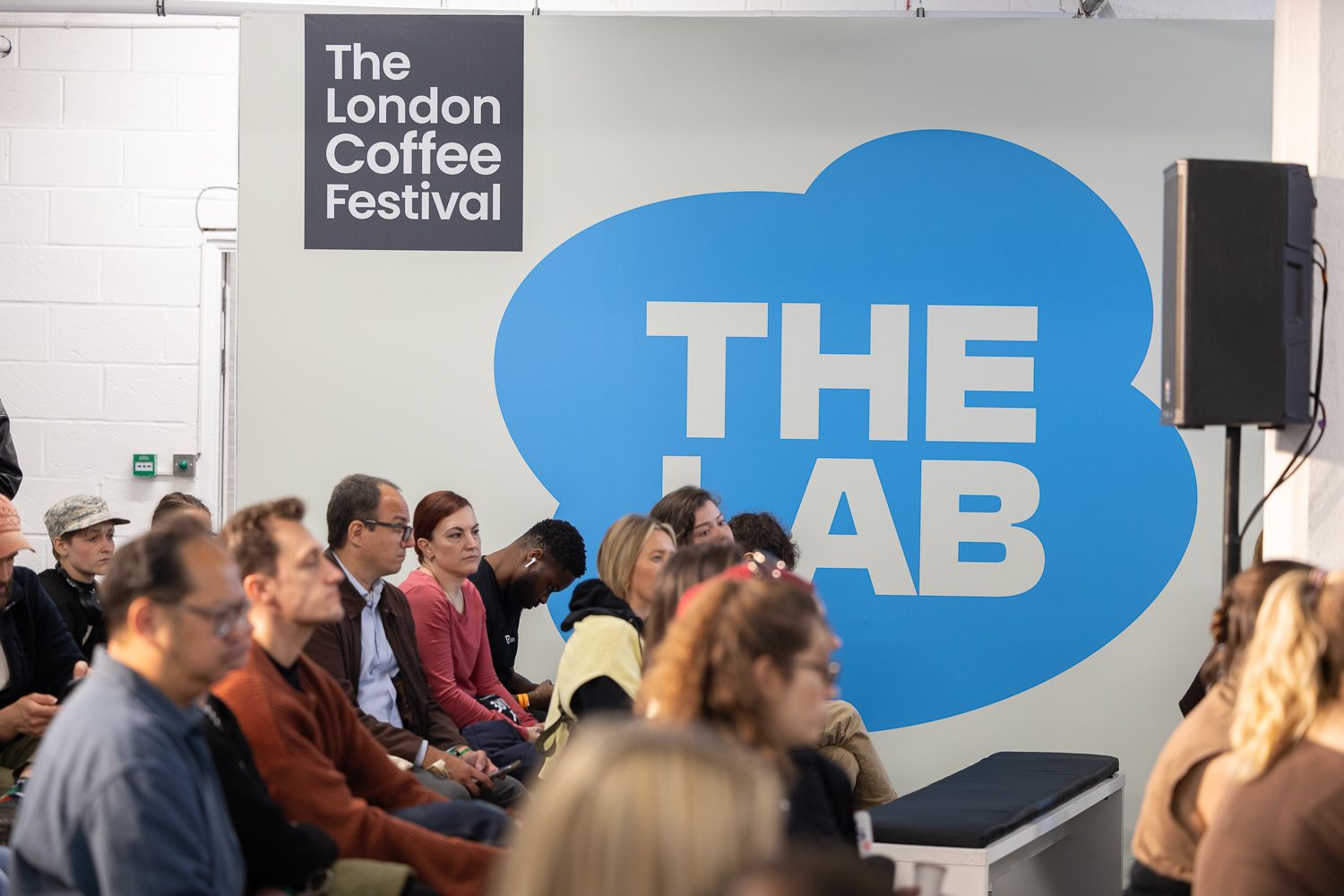
Speaking in the Lab at The London Coffee Festival, Mueller-Pfeiffer, Founder and CEO of International Coffee Consulting, made a case that cuts against the usual robot headlines.
The value of AI in coffee, he argued, is not novelty at the counter. It is margin stability, faster decisions and ownership of the data that runs a business. When volatility rises, automation stops being optional and becomes a way to defend the economics of the cup.
Why does coffee’s volatility turn automation into a strategic decision?
Coffee is a growing category, not a shrinking one. Mueller-Pfeiffer put daily consumption at 3 billion cups worldwide and the category at around $500 billion, growing three to five per cent a year and roughly doubling across three decades.
Production tells the same story, from about 90 million bags in 1995 to roughly 180 million last year, on the International Coffee Organization figures he cited.
The difficulty is that demand has scaled while the infrastructure beneath it has not. Labour is scarce, costs swing, regulation tightens and systems stay fragmented, which is where automation earns its place. He framed the consequence plainly.
AI is not a technology, it’s becoming an operating architecture.
Read that way, AI is less a feature to buy than a layer that decides how a coffee business runs. For operators, the first move is to treat it as margin defence rather than a marketing line.
Where does AI actually add value in a coffee business?
Most of the gains, Mueller-Pfeiffer argued, happen out of the customer’s sight.
Most AI value happens before the consumer ever sees the cup.
That reframes where operators should look first, because the counter is the last link in a long chain. At origin, AI green grading measures defects in seconds, work that once meant shipping samples back and forth, a delay he felt running a roast and ground business in Sweden. In trading, predictive hedging and inventory optimisation matter because the currency swing, he noted, is often a larger cost than the bean itself.
Inside the factory, predictive maintenance and waste analysis move the numbers that count. A cut of 3 to 4 per cent in waste, he said, lands a disproportionate gain on the profit and loss.
What does running an AI coffee shop as an intelligence node look like?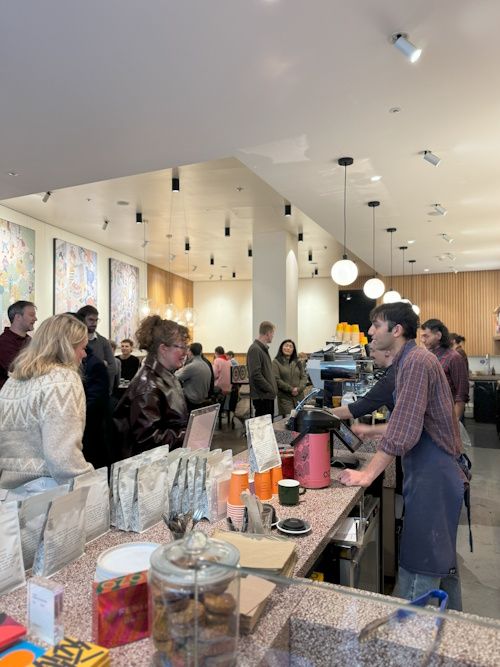
The coffee shop itself, in Mueller-Pfeiffer’s framing, becomes a real-time decision engine rather than a room with a till.
He pointed to Luckin Coffee, which he described as the world’s second-largest chain at 30,000 stores, built less on coffee than on data.
Customers order through an app minutes before arrival, the loyalty relationship is captured, and the model now travels, with Luckin entering the United States while Cotti Coffee has opened in Germany.
For a single site, the same logic starts small. The number-one consumption moment worldwide is still the morning cup between seven and ten, he said, with a dip from two to four in the afternoon, so labour and inventory can be planned against that curve.
What can the capsule industry teach coffee about control?
The capsule business offers the clearest precedent. Mueller-Pfeiffer put it at $30 to 35 billion after about forty years, founded by Nestlé in 1986 as a closed system.
Capsules did not scale because of coffee, they scaled because of control, the interface.
The lesson he drew is that the durable advantage came from owning the machine, the data and the replenishment relationship, not the bean. An AI coffee shop that captures the same loop, through an app, a subscription and recurring orders, is playing that game by other means.
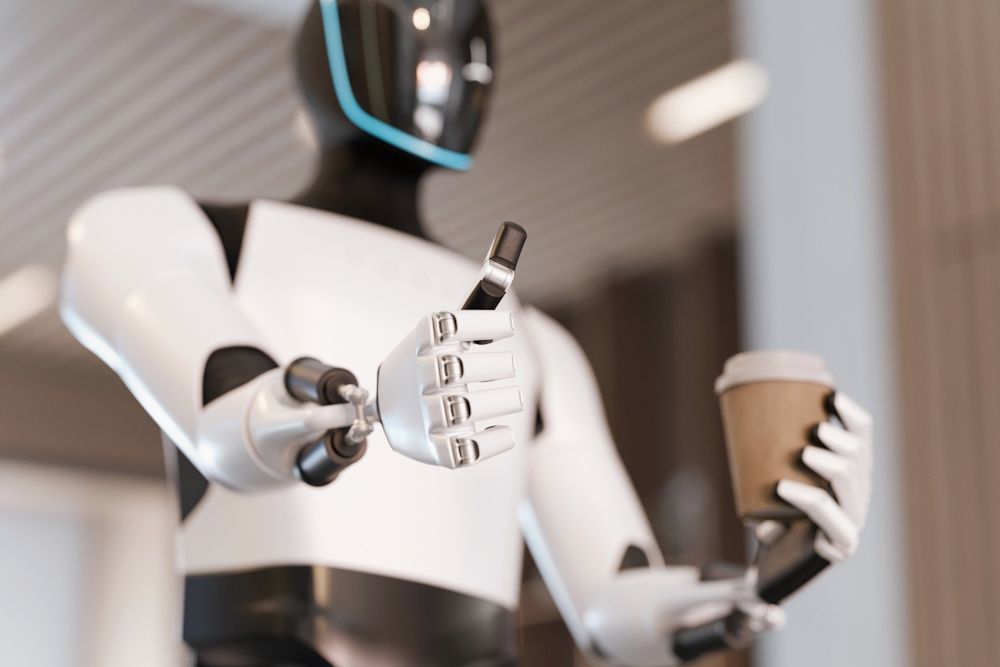
Will a robot barista replace the human one?
Automation can clearly run a venue end to end. Mueller-Pfeiffer described a fully automated coffee shop in Dubai, open twenty four hours with no staff inside, that also sells ice cream. A site like that runs on an AI coffee machine and an app, not a person behind the bar.
Machines handle repetition, precision, volume, and humans deliver emotion, judgment, hospitality.
His point is that a robot barista suits the convenience occasion, while the experience occasion still rewards a human host.
When an audience member from a robotics firm asked which model would win, he declined to crown one, expecting both to exist, with the automatic end growing for speed and the human end holding the room. The decision for operators is which moments to automate and which to protect.
How should a coffee business actually start with AI?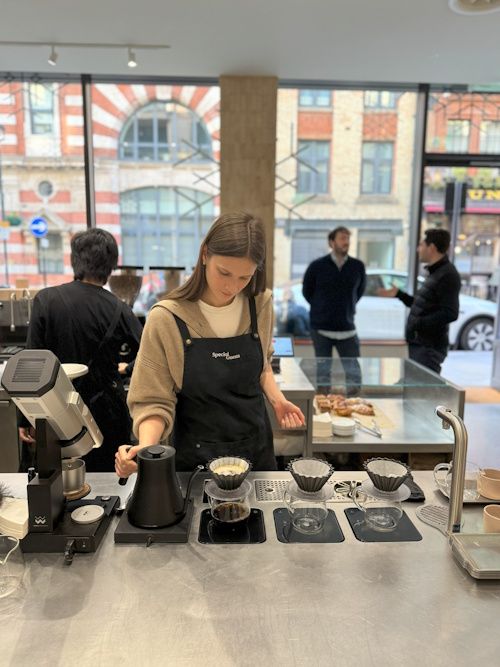
The honest starting point, he told a small-shop owner in the room, is your own numbers. Numbers never lie, he said, and a demand curve will show when to add a person in the morning and cut one in the afternoon before any automation is bought.
From there, Mueller-Pfeiffer set out a rough timeline:
- First 90 days: run a single pilot, such as demand forecasting, quality inspection or inventory alerts.
- By six months: integrate it into workflow, with decision support and learning loops.
- By one year: scale to decision automation across pricing, demand planning, production and logistics.
The sequence matters because, as he warned, single pilots and dashboards without decisions do not change a business. The data foundation comes first.
What this means for coffee professionals
- Independent cafe operators: start with the demand curve, staffing to the seven-to-ten peak and trimming the two-to-four trough before buying any automation.
- Roasters and green buyers: pilot AI green grading and predictive hedging, where the currency swing, not the headline bean price, is often the real exposure.
- Multi-site operators: treat each site’s POS and loyalty data as a forecasting asset and build the data foundation before the dashboards.
- Brand and marketing leads: study the Luckin model, where the lock-in is the app and the replenishment relationship, not the cup.
FAQ
- What is an AI coffee shop? An AI coffee shop uses data and automation to run operations such as demand forecasting, labour scheduling, inventory and pricing, rather than simply automating drink-making. In Mueller-Pfeiffer’s framing, the venue becomes a real-time decision engine, with the biggest gains sitting behind the counter rather than on it.
- Will a robot barista replace human baristas? Not wholesale, on Mueller-Pfeiffer’s account. A robot barista fits the convenience occasion, while the experience-led visit still rewards a human, so most operators will run a hybrid of machine speed and human hospitality.
- Where does AI add the most value in a coffee business? Before the cup. The strongest returns come from green grading, predictive hedging, predictive maintenance, waste reduction and demand forecasting, where small percentage gains move the profit and loss.
- How should a small coffee shop start with AI? Start with your own numbers. Use the daily demand curve to plan staffing and stock, run one focused pilot for about 90 days, then widen into workflow and decision automation over the following year.
Conclusion
Mueller-Pfeiffer’s case comes down to a change in what wins. The edge moves from the craft of the cup to the design of the system around it, from roasting skill to operating intelligence.
The next decade will not reward the best roasters alone. It will reward the companies that combine outstanding coffee with outstanding system architecture.
To follow the trade programme where debates like this are staged, join The London Coffee Festival mailing list or submit a stand enquiry.
About our speaker
Gerd Mueller-Pfeiffer
Founder and CEO, International Coffee Consulting
Mueller-Pfeiffer spent years inside the Nestlé coffee business, launching the Dolce Gusto system as a pioneer market and, as managing director for the Nordic region, running the Zoégas roast and ground brand. He later led the retail launch of Starbucks in Germany, Austria and Switzerland after Nestlé’s licensing deal, before founding International Coffee Consulting. That record across launches, operations and multiple markets is why his read on automation and margin carries weight.
Based on a session delivered at The London Coffee Festival 2026. Edited from the original transcript for clarity, structure and long-term reader value.
)
)
)
)
)
)
)
)
)
)
)
)
)
)
)
)
)
)
)
)
)
)
)
)
)
)
)
)
)