)
)
Coffee Sustainability Now Turns on Proof, Not Promises
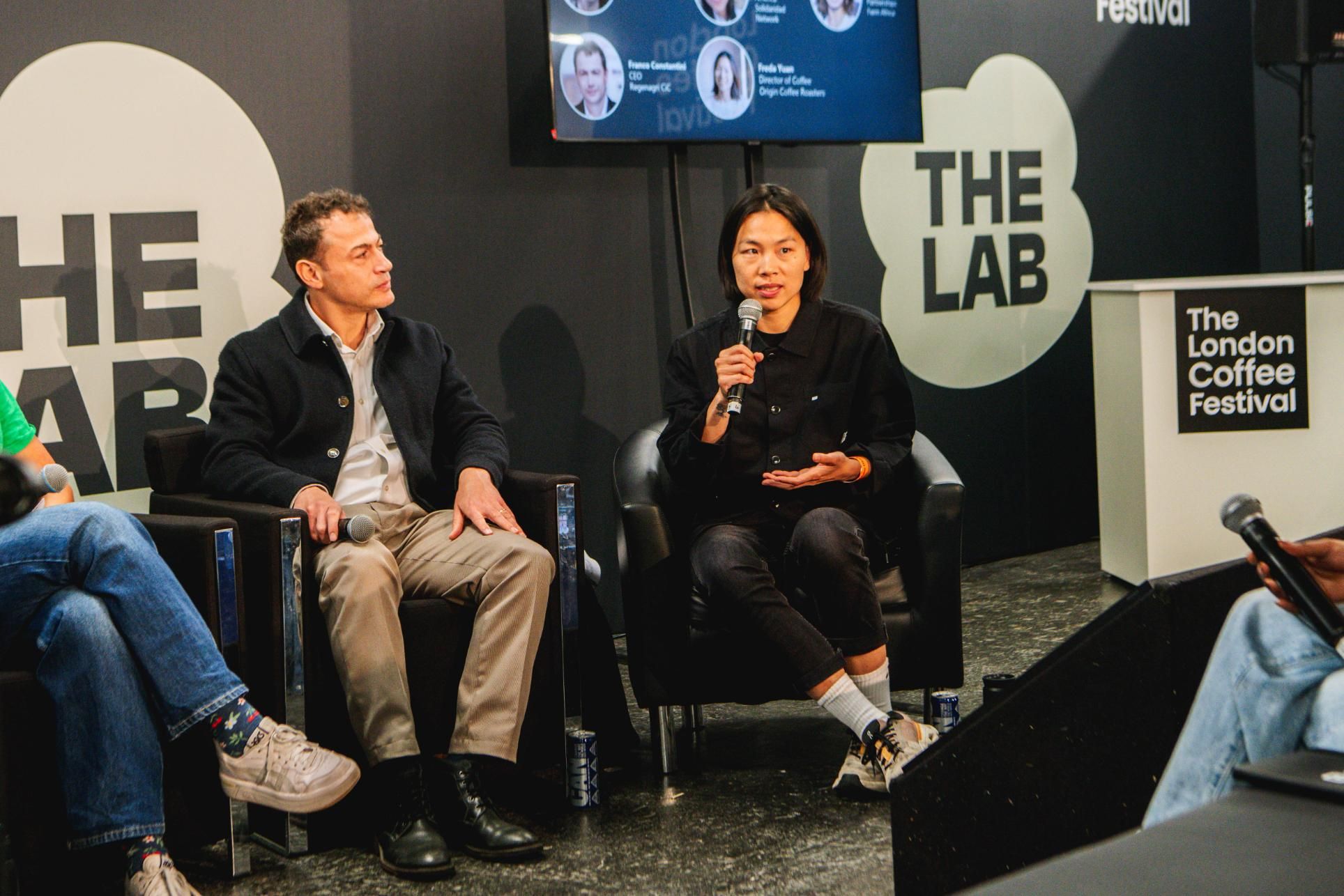
- Speakers:
- Jonny England, UK Director of Coffee, Löfbergs
- David Rickenback, Coffee and Beverage Community Expert, Nuova Distribution UK
- Freda Yuan, Director of Coffee, Origin Coffee Roasters
- Franco Costantini, CEO, Regenagri
- Anissa Msallem, Head of Partnerships, Farm Africa
- Andrea Olivar, Strategy & Quality Director, Solidaridad Latin America
- Estimated read time: 12 minutes
Quick read summary
- Real coffee sustainability now depends on proving that money and resilience reach the farmer, not on the label a brand prints.
- It matters now because volatile prices, the EU Deforestation Regulation and a 2026 green-claims rule make unverified claims a commercial risk.
- Traceability has improved sharply, and regenerative agriculture is shifting from buzzword to a measured, certified practice backed by baseline data.
- Speakers urged businesses to demand traceability in their own supply chains, set a baseline before claiming, and help fund the transition at origin.
- Ask your suppliers who grew your coffee and what they were paid, because a chain that can answer is selling something you can verify.
Near the end of a sustainability panel in The Lab, a member of the audience put the uncomfortable question. Traceability was improving and certifications were multiplying, he said, yet farmers on the ground were still not seeing it reach their prices. The European Union had built an entire regulation around proving where coffee comes from, and still the money was not arriving.
It was the right challenge, and it framed two back-to-back sessions at the London Coffee Festival 2026. The trade has spent years promising sustainability. The harder question now is whether it can prove it, and whether the proof reaches the people who grow the crop.
What does sustainability in coffee actually mean now?
 Ask five people in coffee what sustainability means and you will get five answers, because a green buyer, a roaster, a machine maker and a cafe owner each see a different stretch of the chain. Jonny England, UK Director of Coffee at the Swedish roaster Löfbergs, anchored it in one idea.
That reframes the issue as economics before ecology. If the grower cannot earn a living, no amount of recyclable packaging keeps coffee on the shelf in fifty years.
David Rickenback, Coffee and Beverage Community Expert at Nuova Distribution UK, widened the lens from the equipment side. The reflex, he noted, is to treat sustainability as not purely environmental, when it is also about longevity: keeping roasters and cafes solvent, and lowering energy and equipment costs so the squeeze does not land on farmers or customers. For an operator, that means counting sustainability in the same ledger as rent and wages, not on a separate values page.
Sustainability in coffee is an economic test as well as an environmental one. If the grower cannot earn a living, the supply does not survive.
Everything starts with the coffee production and for me sustainability has to mean equal value distribution within the supply chain.
Why has proof started to matter more than the promise?
For years the trade discussed coffee traceability without delivering it, because the supply chain is long and fragmented. Jonny England said regulation changed that. The EU Deforestation Regulation, which requires importers to trace coffee back to the individual farm, does not bind the United Kingdom directly, yet it has forced European roasters, traders and the middlemen between them to build the tracking systems that voluntary effort never produced.
The result is real progress on knowing where coffee comes from. What it has not yet delivered, as the audience challenge made plain, is a matching rise in what the farmer is paid. England's practical advice was to demand traceability inside your own business first, because you cannot fix what you cannot see.
For a buyer, the reading is that traceability has become table stakes. It shows you where to look for problems. It does not, by itself, solve them.
NOTE: Since this discussion, the UK government has confirmed that it will mirror the EU’s approach in forthcoming new GB deforestation legislation.
What is regenerative agriculture, and what does it change for coffee?
Regenerative agriculture has become a common phrase, so a working definition is overdue.
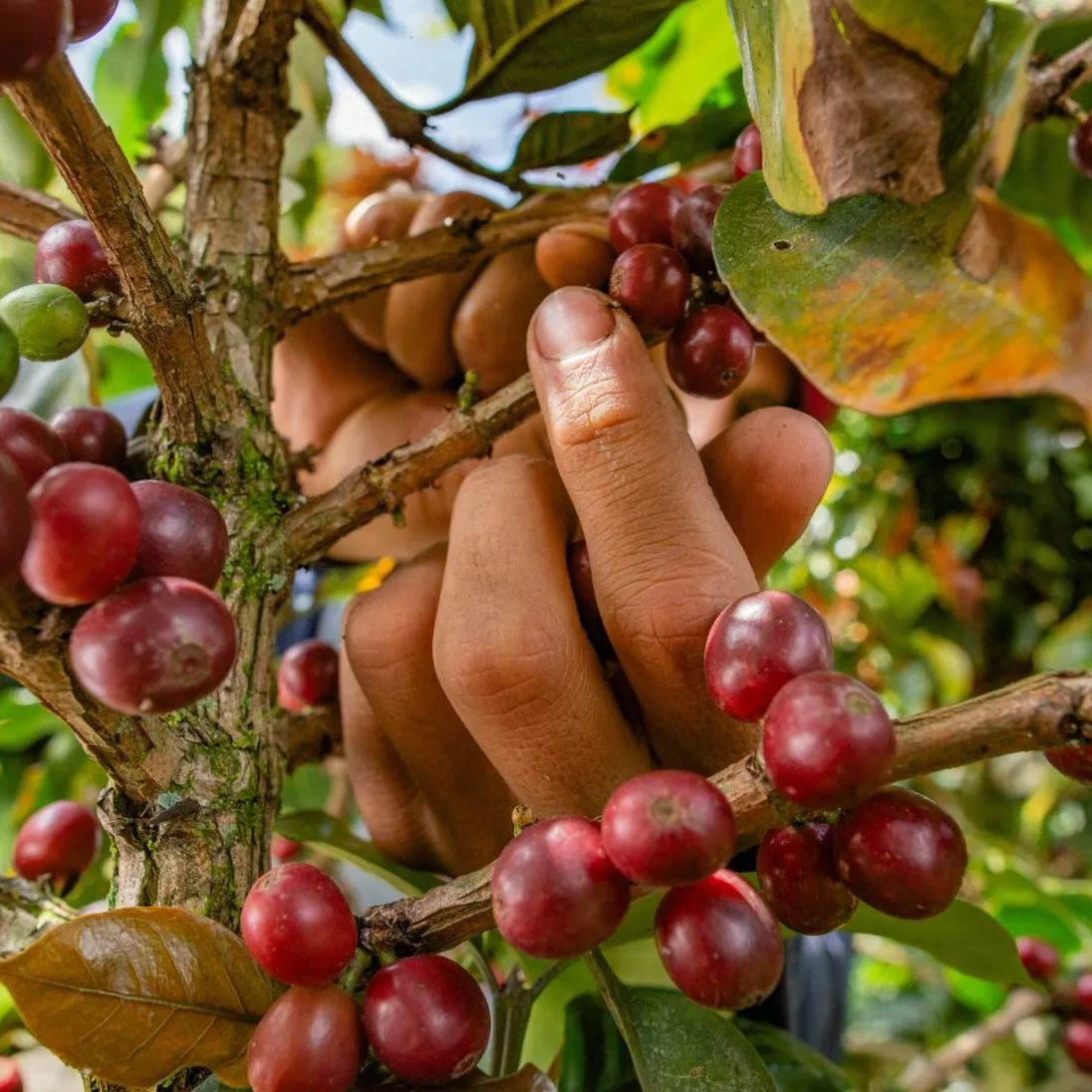
Andrea Olivar, Strategy & Quality Director - Latin America at Solidaridad, which helped create Fairtrade three decades ago, pointed out that the idea dates to the 1980s and centres on soil health. In coffee it means producing more with less: holding or raising yields while cutting inputs and emissions so the soil recovers.
The economics have to work for the grower first.
Her point is that a practice which lowers a farmer's output, however green, will not last. Regenerative methods earn their place only when they keep production up.
Franco Costantini, who runs the UK-based certification standard Regenagri, described certification as the way to structure that transition and verify it independently. A farm in Brazil and a farm in India travel to the same destination by different routes, he argued, and a credible standard has to allow for that while still proving the outcome.
The practical toolkit is straightforward in layman’s terms, but takes time: swapping out synthetic inputs for natural alternatives, layering in intercropping and cover crops, and bringing back shade through agroforestry - all introduced gradually over time, not rushed in a single season.
If the farmer is able to maintain the productivity and increase it, then the system can work by itself.
Who pays for the switch to regenerative farming?
The change is not free. Andrea Olivar put the cost of moving from conventional to regenerative production in Peru at around $2,000 per hectare, varying by country. Her argument was that the buyers downstream, who make the loudest claims about cleaning up their supply chains, should help fund the transition rather than leave the grower to carry it.
Jonny England described one way to add income on top of the coffee price. Through agroforestry and regenerative projects in Brazil, Löfbergs pays a premium for the coffee and also helps farmers earn from carbon sequestration, selling the captured carbon into the market as a second revenue line. The takeaway for buyers is blunt: a regenerative claim with no funding behind it is a cost transfer to the farmer, not a partnership.
Do certifications and labels actually prove anything?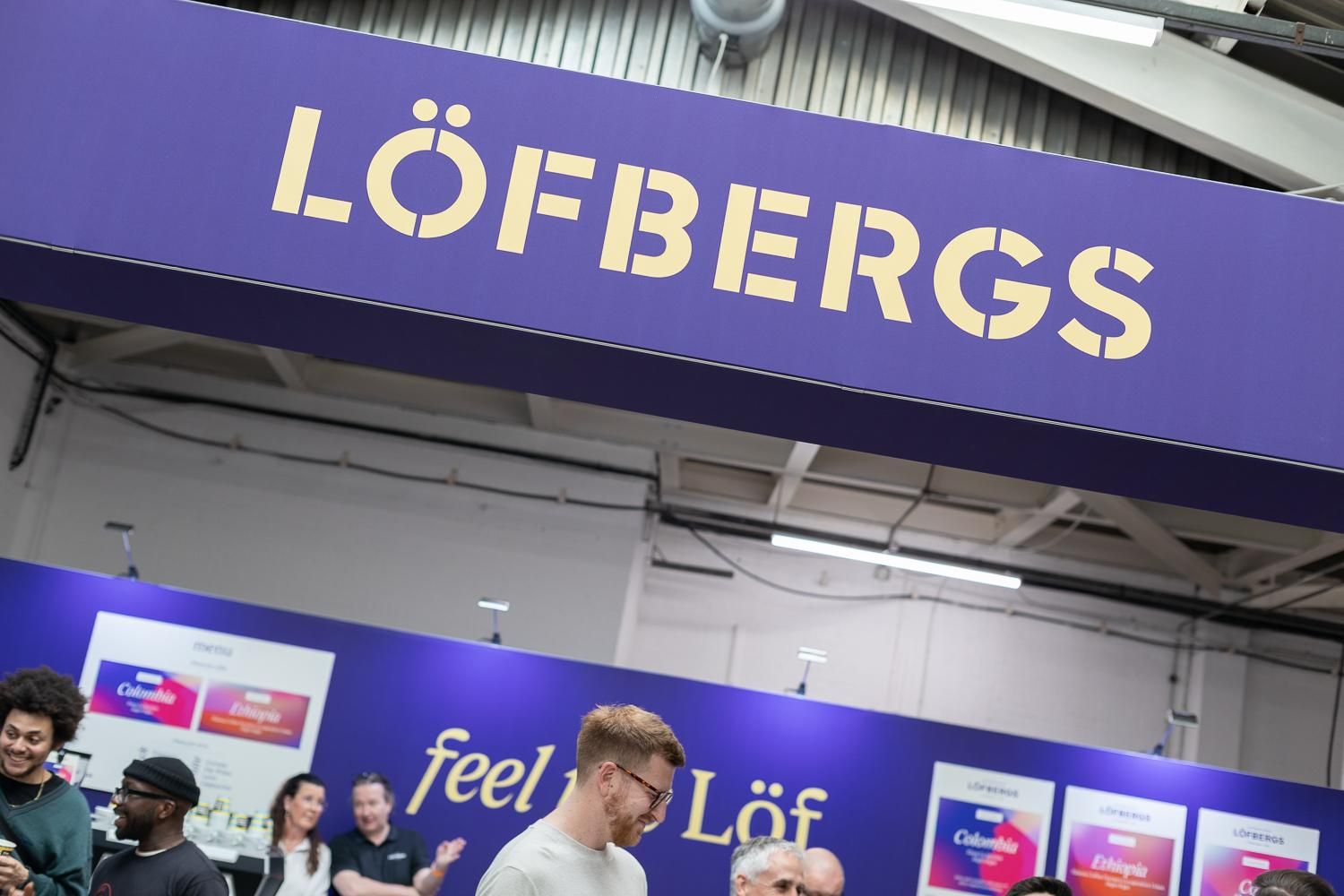
Certification is where the two sessions disagreed most usefully. Franco Costantini made the commercial case. A third-party certification assures integrity, satisfies regulators who now want verified data behind environmental claims, and opens doors to buyers seeking certified coffee. He put the sales uplift for certified products at 10 to 15 per cent, citing Amazon's Climate Pledge Friendly programme reporting 12 per cent.
Anissa Msallem of the charity Farm Africa was more measured. Certification, she said, is part of a package rather than the whole package, and it cannot replace the training, finance and market access that smallholders actually need.
Freda Yuan, director of coffee at Origin Coffee Roasters, was the most cautious of the three, because the word itself has slipped its moorings.
Anyone can use that word right now. So how do you validate that?
Freda’s point is that a claim anyone can make is worth nothing until it is evidenced, which is why Origin is building a baseline year of data before it prints the word on a bag. That caution is about to be enforced: Freda flagged a green-claims rule arriving in 2026 that will require environmental claims to be backed by data, turning greenwashing from a reputational risk into a compliance one. For a brand, the safe sequence is now evidence first, label second.
Does any of this reach the farmer?
Strip away the frameworks and the question is whether a grower is better off. Anissa Msallem described the change Farm Africa sees when smallholders adopt better practice and gain access to markets: healthier soil, higher yields, better quality and a higher price, in what she called a virtuous circle. Farm Africa's exhibition on the festival's second floor told that story through three women coffee farmers in Uganda.
The measure of impact she returns to is disarmingly concrete.
The key thing we always hear from farmers is that they can send their children to school because in the parts of Africa that we work in, schooling is not free.
Sustainability, for the grower, is counted in school fees and roofs, not certificates. Jonny England set that against a volatile market. Green coffee prices reached record highs over the past two years, yet consumption barely fell, which he read as evidence that drinkers will pay for quality when the value is explained.
The risk is that the spike has already begun to retrace while the deeper problem remains. He framed the stake in generational terms, with some 25 million smallholder farmers worldwide and their children largely declining to follow them onto the land.
We don't have a future as an industry if we don't support the farmers that we source from today.
Securing the next generation, in his account, is the whole purpose of a living income. A price that is fair this season but not dependable will not keep a young person farming.
How can a coffee business make its sustainability claims provable?
- Demand traceability inside your own supply chain first, because you cannot prove or fix what you cannot see.
- Set a baseline before you make a claim. Measure where your sourcing actually stands, as Origin is doing, so the claim rests on data rather than adjectives.
- Decide what you will fund in the transition. If you ask farmers to go regenerative, share the roughly $2,000-per-hectare cost rather than transfer it.
- Match the proof to the relationship. Use third-party certification where it opens markets and reassures regulators and use direct trade and long relationships where they give depth a label cannot.
- Build extra income for growers, not just a premium, since carbon and agroforestry can add a revenue line on top of the coffee price.
- Plan for longevity rather than a campaign. Treat sustainability as a multi-year baseline-and-improve cycle and protect quality by taking cost out of energy and equipment before the cup.
What this means for the coffee trade
- For green buyers: before you renew a contract, check whether your traceability data is lifting the price at origin, not only your compliance file.
- For roasters: set a sourcing baseline this year, because the 2026 green-claims rule will require data behind any sustainable or regenerative claim you print.
- For cafe operators and groups: carry sustainability in your cost base, and find savings in energy and equipment before you compromise on quality or pay.
- For brand and marketing leads: lead with verifiable sourcing and farmer income, since an unprovable label is becoming a liability rather than an asset.
FAQ
- What is regenerative agriculture in coffee? It is a way of farming that rebuilds soil health while maintaining or raising yields, using methods such as reduced synthetic inputs, cover crops, intercropping and agroforestry. In coffee it is summed up as producing more with less, and it is adapted to each country and farm rather than applied as one formula.
- What is the EU Deforestation Regulation, and does it affect UK coffee? The EUDR requires companies placing coffee on the EU market to prove it was not grown on recently deforested land, traced back to the farm. It does not bind the UK directly, but because many roasters supply both markets, it has pushed traceability through much of the global supply chain. Since the discussion, the UK government has confirmed that it will mirror the EU’s approach in forthcoming new GB deforestation legislation.
- Does certification guarantee farmers are paid more? Not on its own. Certification can provide assurance, market access and price premiums, but speakers stressed it is one part of a wider package that also needs training, finance and direct relationships. Without those, a label does not reliably raise farmer income.
- Why are green coffee prices so volatile? They are shaped by weather, climate pressure on yields, currency and speculation, and they hit record highs in recent years before retreating. That volatility makes planning hard for farmers, which is why a dependable living income matters more than one good season.
- What can a small coffee business do about sustainability? Demand traceability in your own supply chain and set a baseline of where your sourcing stands, then decide what you can fund or improve over several years. Speakers advised treating it as a long-term cycle rather than a one-off claim.
Conclusion
Both sessions point one way. Traceability, regenerative agriculture and certification are tools, worth something only when they move money and resilience to the people who grow the crop, and only when the claim can be checked.
The clearest test of a sustainable coffee is not the certification on the bag. It is whether the family that grew it can send their children to school and expect the next generation to farm at all.
Speakers
Freda Yuan
Director of Coffee, Origin Coffee Roasters
Yuan leads coffee sourcing and policy at Origin, including its work on regenerative agriculture, and is building the company's first baseline of producer data. Her caution about unproven claims comes from running that sourcing in practice.
Andrea Olivar
Strategy & Quality Director – Latin America, Solidaridad
Andrea has more than 19 years of experience in developing sustainable supply chains. Her career spans from collaborating with global corporations such as Nestlé, Starbucks and Cargill to achieve their ESG goals, to implementing impact programmes with small-scale producers.
Franco Costantini
CEO, Regenagri
Costantini runs Regenagri, a UK-based certification standard for regenerative agriculture used across supply chains worldwide. He speaks to how the transition is verified and what certification can and cannot do.
Anissa Msallem
Head of Partnerships, Farm Africa
Msallem leads partnerships at Farm Africa, an NGO working with smallholder farmers in eastern Africa, including coffee producers. Her perspective is rooted in livelihoods and the practical support farmers need beyond certification.
David Rickenback
Coffee and Beverage Community Expert, Nuova Distribution UK
David advises on equipment and workflow at Simonelli Group, the manufacturer behind Nuova Simonelli and Victoria Arduino, with a background spanning commercial roasting, marketing and ecological entrepreneurship. He brings the operational and equipment angle to the sustainability debate.
Jonny England
UK Director of Coffee, Löfbergs
England buys green coffee for the Swedish family roaster Löfbergs, which is marking 120 years in business, and has held the role for around four years. His remit covers sourcing and the producer relationships at the centre of the company's sustainability strategy, which is why he speaks with authority on value distribution at origin.
)
)
)
)
)
)
)
)
)
)
)
)
)
)
)
)
)
)
)
)
)
)
)
)
)
)
)
)