)
)
How to Open a Coffee Shop That Survives the First Year
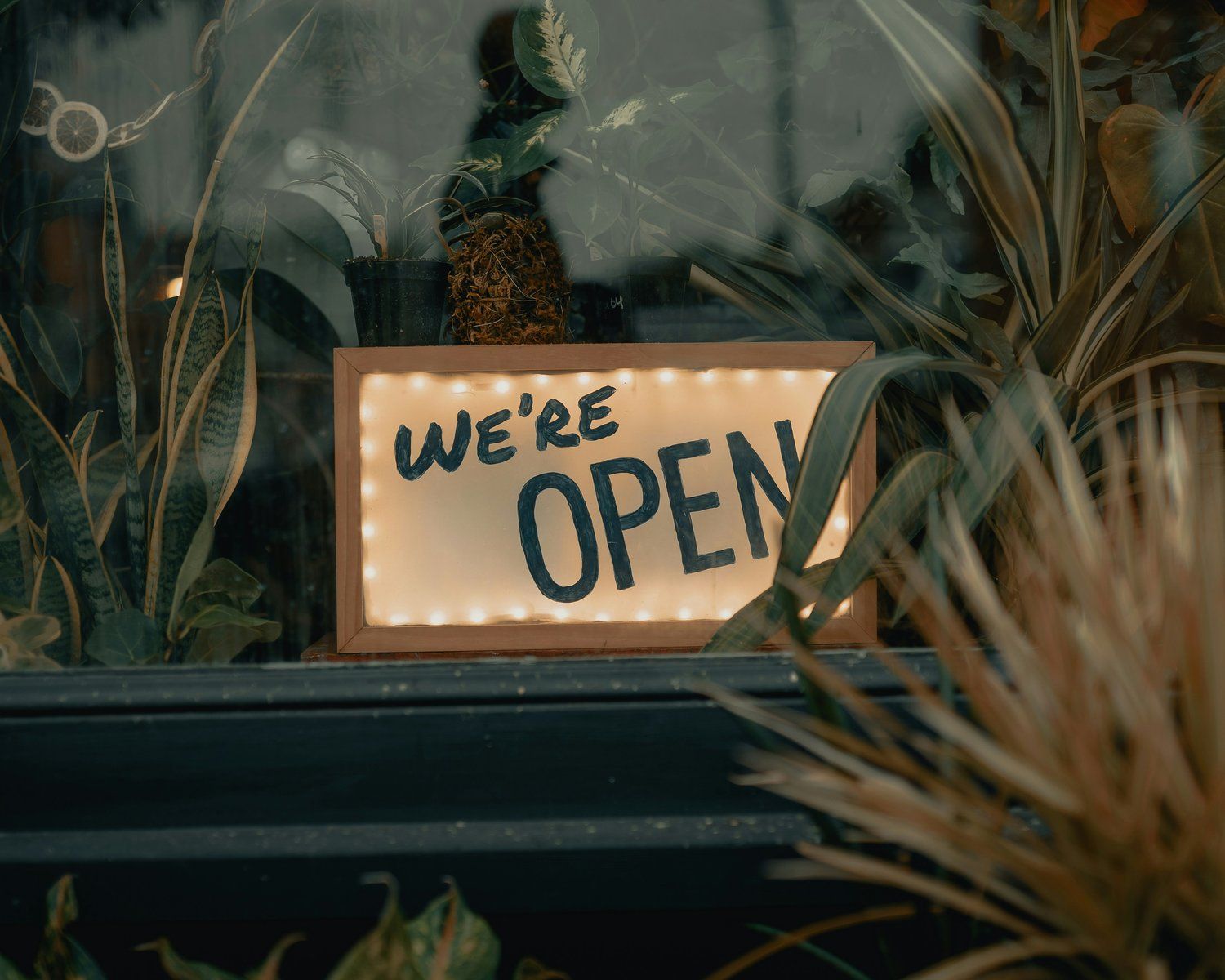
Based on the sessions “Turning your dream into reality: How to open a coffee shop”, “Founders forum: Starting a coffee business and scaling”, “Scaling sustainably: When and how to grow your business” and “Standart live interview: Running a coffee business in Ethiopia”, delivered at the London Coffee Festival 2026.
- Speakers:
- Andrew Bowen, coffee shop and cafe coach at Café Success and co-author of The Daily Grind: how to open & run a coffee shop that makes money
- Liz Garnell, managing director, Gourmet Coffee Bar & Kitchen
- Leon Zadeh, founder and director, Saint Espresso
- Caroline Carter, head of coffee, Gather & Gather
- Ian Kissick, managing director, Formative Coffee
- Stuart Murray, co-founder and director, Scenery
- Harry George, founder, SEND Coffee CIC
- Hester Westerveld Syoum, founder and co-owner, Bette Buna
- Will Davies, staff writer, Standart
- Estimated read time: 15 minutes
Quick read summary
- How to open a coffee shop turns less on coffee skill than on vision, finances and people.
- It matters now because margins are tight and a single bad lease or weak hire can sink a first site before it finds its feet.
- The craft has become the baseline, so cafes increasingly compete on brand, service and the owner’s own presence rather than on the cup alone.
- The one thing to do first: decide what your shop will be famous for, then pressure-test the numbers against that idea.
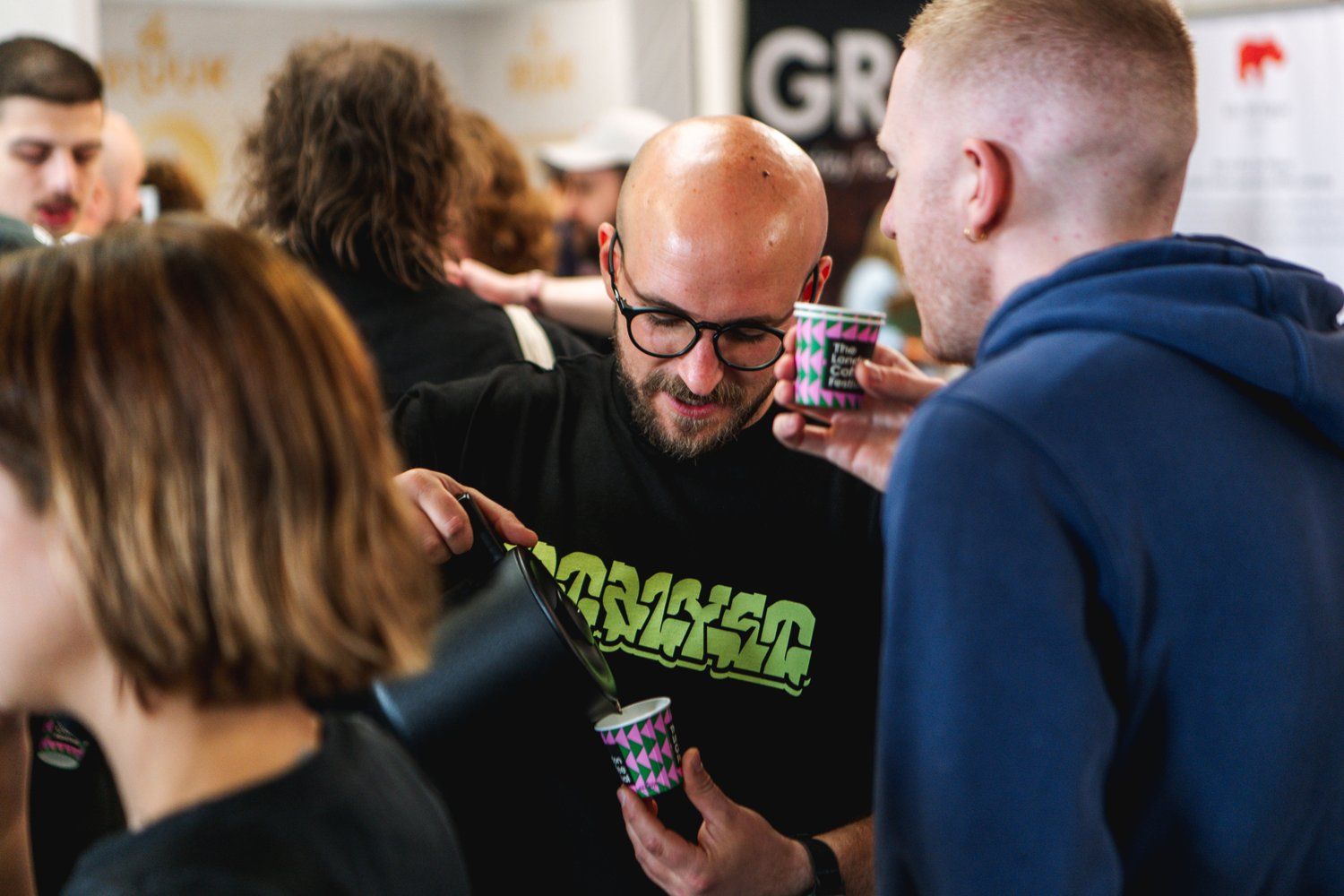 Picture a Tuesday morning. The machine is warming up, fresh croissants are coming out of the oven, and a queue is forming round the corner. Then the phone buzzes. Your best barista has called in sick, the milk has not been delivered, and the grinder has jammed.
Andrew Bowen, coffee shop and cafe coach at Café Success and co-author of The Daily Grind: how to open & run a coffee shop that makes money, opened his session with that exact scene, because it is the gap most new owners fall into. The fantasy is the queue. The reality arrives before nine o’clock, and it has nothing to do with coffee.
Across four sessions at the London Coffee Festival 2026, a coach, three founders, three multi-site operators and an Ethiopian producer kept circling the same idea from different directions. The craft of making good coffee has become the price of entry, not the advantage. What decides whether a shop lasts is the business around the cup.
Why does the coffee turn out to be the easy part?
The people who run successful sites talk surprisingly little about extraction. They talk about who is behind the counter.
Caroline Carter, head of coffee at Gather & Gather, made the point most directly when asked how she picks who to hire across a large contract-catering estate.
So, I think you can teach people how to make coffee and great coffee, but you cannot teach people how to engage with your customers and how to bring their personality to work every day.
 Carter’s argument reframes the whole hiring decision: skill is trainable, warmth is not, so you recruit for the thing you cannot teach. For a first-time owner that means weighting a hire on attitude and customer instinct ahead of latte-art credentials.
Bowen put the same thought at the level of the brand itself. A shop that simply sells coffee and sandwiches, he argued, no longer stands out, so the founder has to decide what the place will be known for before anything else is bought or signed.
What should you be famous for, and what should you call it?
Bowen’s first instruction costs nothing and comes before the lease, the kit or the logo: get a clear, simple idea of what the shop is for. He framed it as a single question, what will you be famous for, and warned that a vague answer shows up later in every other decision, from the menu to the fit-out.
That clarity then has to survive a brutal first encounter. Bowen argued that a customer decides how they feel about a shop almost the moment they walk in.
You’ve got three seconds for people to decide whether they like you or not.
 Bowen’s three-second rule turns design and the coffee shop business name from vanity into commercial decisions, because the look, the feel and even the name set the price the shop can charge. A higher-quality fit-out, on his account, justifies a higher cup price in a way a generic one never can.
The practical move for a founder is to settle the concept and the name first, then let them govern the budget, rather than designing backwards from a coffee machine.
How much does it cost, and where should the money go?
The cost question has no single figure, but the speakers were specific about where money is won and lost. Bowen named three financial mistakes he sees repeatedly: paying too much for rent, not knowing the weekly numbers, and taking a unit too small to ever turn a profit.
 His rule of thumb for the first of those is concrete. Rent and rates, on his account, should sit at no more than 10 per cent of sales, with the large chains running far leaner, so a site that breaches that ceiling becomes a millstone for the length of the lease.
The second mistake is solved by habit rather than spend. Bowen advised a weekly stock take and an EPOS system kept current, so an owner can work out roughly what they made last week instead of waiting for an accountant to deliver bad news a quarter late.
On equipment, the operators agreed that focusing on the fundamentals delivers better returns than spending unnecessarily on high-profile purchases.
For a founder writing a coffee shop business plan, the implication is to model the rent ratio, the weekly reporting and the equipment priorities in that order, and to treat a tight cash-flow forecast as the document that keeps the doors open.
What do first-time owners most underestimate?
The founders were candid that the early picture in your head rarely survives contact with customers. Ian Kissick, managing director of Formative Coffee, opened his Westminster cafe a year before the first lockdown and learned the lesson fast.
I think don’t try to start with perfect because the moment that your customers walk in, they will completely change everything.
 Kissick’s warning is an argument against over-spending and over-planning before a single customer has walked in, because the market will redraw the plan anyway. Better, he argued, to start small, keep money back, and let real demand tell you what the shop should become.
Harry George, founder of SEND Coffee CIC, added the part nobody expects: how much compromise running a business demands, with regular customers, suppliers and partners all pulling at the original vision. The romance of being your own boss, on his account, gives way quickly to swallowing your pride.
Kissick’s other underestimated truth is that, for a single site, the owner is the asset. People come back for the person who knows their order, which is powerful while it lasts and fragile the moment a founder tries to be in two shops at once.
What should you sort before you sign anything?
This is where the sessions turn into a checklist a first-time owner can act on. Drawn from Bowen’s three mistakes and the founders’ hard-won advice, the order looks like this.
- Decide what the shop will be famous for, and let that one idea govern the name, the menu and the look.
- Work in a coffee shop first. Bowen was emphatic that the physical reality of a full day on the floor is the test before any lease is signed.
- Get the lease checked by a real lawyer, not an AI tool, since it is the largest financial commitment most founders will ever make and the hardest to undo.
- Keep rent and rates to around 10 per cent of sales, and size the unit to take enough money to clear that and still profit.
- Put the weekly stock take and live EPOS reporting in from day one, and register for VAT from the start rather than retrofitting a 20 per cent price rise later.
- Spend on the grinder, the water and the people first.
- Hire for attitude and look for a flawed competitor you only need to beat by a little.
The test of this list is simple. Each item is a decision you can make before you commit money, and each one removes a way the first year tends to go wrong.
How do you scale without losing what made you good?
Surviving the first site is one problem. Repeating it is another, and the multi-site operators were clear that what works for one shop does not transfer unchanged to three or thirty. Leon Zadeh, founder and director of Saint Espresso, has opened ten sites plus a roastery and a bakery across central London, and put the single most important hiring principle plainly.
When you’re hiring, hire for mindset, not skill set. The right mindset will pick up the skills, but the wrong mindset will probably destroy your business.
 Zadeh’s rule scales Carter’s point into a growth strategy: as you add sites you cannot personally vouch for every coffee, so you hire people whose judgement you trust and build systems around them. He argued those systems should go in before you think you need them, and that quality cannot be allowed to slip as volume rises.
Carter described the same discipline from the catering side, leaning on supplier partners and a clear set of house standards so that quality holds across many sites without every cafe feeling identical. Liz Garnell, managing director of Gourmet Coffee Bar & Kitchen, which trades from railway-station kiosks, added the survival instinct that ties it together, a willingness to adapt the model as commuter habits and tastes shift rather than clinging to the original plan.
For an operator eyeing a second site, the implication is to invest in systems, partners and people before the expansion, not during it, and to accept that the founder’s role has to change from making coffee to building the business that makes it.
Where does the money actually get made, and who pays for it?
The same lesson runs all the way to the farm. Will Davies, staff writer at Standart, who also works on the account side of a roastery, interviewed an Ethiopian producer and named the uncomfortable economics of the chain.
Typically, the biggest point of value extraction is the roastery, which is generally not in a producing country.
Davies’ point lands differently after six sessions about UK shop economics: the margin a barista or owner frets over sits a long way downstream from the people who grow the coffee. It reframes “where does the money go” as a question about the whole supply chain, not just the till.
Hester Westerveld Syoum, founder and co-owner of Bette Buna, a coffee-growing business in Ethiopia, argued that sustainability only holds if it is built into the model rather than added on top.
The first day you find us not sourcing sustainable or paying the fair price for farmers or not doing what we say we do, we are gone.
 Westerveld Syoum’s framing connects the origin end to every cafe owner in the room, because the producer carries the same cash-flow pressure a new operator does, getting paid once a year while costs run all year round. She also described how landlocked logistics and a complex export route stretch delivery times, which is why she urged roasters and shops to build genuine relationships rather than treat origin as a commodity.
For a UK operator, the practical takeaway is that sourcing decisions are business decisions, and that a transparent relationship with a roaster and, through them, a producer is part of building a shop that lasts rather than a moral extra.
What this means for aspiring coffee shop owners
- Before signing a lease, get it checked by a solicitor and confirm rent and rates land near 10 per cent of projected sales, because this is the commitment you cannot easily reverse.
- Before fitting out, settle what the shop will be famous for and its name, then spend on the grinder, water filtration and pay.
- Before opening, work a full shift in someone else’s shop, and register for VAT from day one to avoid an unplanned price rise later.
- For operators planning a second site, install systems, supplier partnerships and a trusted management layer first, and accept that your job shifts from barista to business builder.
- For anyone sourcing coffee, treat the roaster relationship and origin transparency as a commercial decision that supports retention and reputation, not as an add-on.
FAQ
- How much does it cost to open a coffee shop? There is no single figure, and it depends heavily on location, unit size and fit-out. The speakers were clearer on the ratios than the totals: keep rent and rates near 10 per cent of sales, size the unit to take enough money to profit, and hold cash back rather than spending the whole budget on the fit-out.
- What should I call my coffee shop? Decide what the shop will be famous for first, then let the coffee shop business name follow from that idea. Bowen argued the name and look are commercial choices, because a customer forms a judgement in seconds and that judgement sets the price you can charge.
- How much does a coffee shop owner make? Earnings vary widely and were not the focus of these sessions, but the operators stressed that profit follows tight control of rent, weekly numbers and waste rather than sales alone. Several framed real success as a business that can support a good team, not just the founder.
- Do I need coffee experience to open a coffee shop? You need to understand the work, which is why Bowen urged spending time working in a shop before committing. Murray argued you do not need to know everything before you start, because suppliers and roasters will help and you will learn fastest by trading.
- How do I grow from one coffee shop to several? Put systems, supplier partnerships and trusted managers in place before you expand, not during it. Zadeh’s rule is to hire for mindset over skill and to protect quality as volume rises, while accepting that leading several sites is a different job from running one.
Conclusion
The festival’s operators made a coherent case that opening a coffee shop is won on the things around the cup: a clear idea, disciplined money, the right people and honest relationships that run from the counter back to the farm. The craft is assumed. The business is the work. As Westerveld Syoum put it, a sustainability-led model only survives if you would rather close than break the promise it is built on, which is as true of a first cafe’s standards as it is of an Ethiopian farm.
To follow the next round of Lab sessions and the 2027 programme as it is announced, join the London Coffee Festival mailing list.
About the speakers
Andrew Bowen
coffee shop and cafe coach at Café Success and co-author of The Daily Grind: how to open & run a coffee shop that makes money
A former coffee shop owner who now coaches founders on starting, running and selling cafes, Bowen co-wrote a widely used guide to opening a coffee shop and advises operators internationally. His session was a practical walkthrough of vision, finance, location and equipment.
Caroline Carter
head of coffee at Gather & Gather
Carter leads coffee across a large UK contract-catering estate spanning workplaces and universities, with a background in high-street and high-end retail operations and training. Her authority is in delivering consistent quality and people development at scale.
Leon Zadeh
founder and director of Saint Espresso
Zadeh has grown Saint Espresso to multiple central London sites alongside a roastery and bakery, building training and progression structures as the business expanded. He speaks from direct experience of scaling while protecting quality.
Ian Kissick
managing director of Formative Coffee
Kissick left a finance technology career to open a cafe in Westminster, then expanded into roasting, wholesale and ecommerce. His perspective is that of a founder who diversified a single site into a multi-channel business.
Stuart Murray
co-founder and director of Scenery
Murray moved from a sporting career into coffee, working as barista, trainer and in wholesale before co-founding the Scenery roastery, which now runs a cafe alongside the roasting business. He speaks on culture, people and defining success.
Harry George
founder of SEND Coffee CIC
George has opened coffee shops all over the world and currently runs a community-interest coffee business that trains and employs people with special educational needs and disabilities across London sites, one of which has won an independent coffee shop award. His authority spans both commercial and social enterprise models.
Liz Garnell
managing director of Gourmet Coffee Bar & Kitchen
Garnell built a coffee business operating from railway-station kiosks over roughly two decades, adapting the model through major shifts in commuter behaviour. She speaks on resilience, partnerships and staying relevant.
Hester Westerveld Syoum
founder and co-owner of Bette Buna
Westerveld Syoum co-founded a for-profit, sustainability-led coffee-growing business in Ethiopia that runs a model farm, nursery and training programme for community farmers. She speaks on supply-chain reality and building sustainability into a business model.
Will Davies
staff writer at Standart, who also works on the account side of Skylark Coffee
Davies conducts interviews for the specialty coffee magazine Standart and brings a roaster’s view of sourcing economics and producer relationships.
Based on sessions delivered at the London Coffee Festival 2026. Edited from the original transcripts for clarity, structure and long-term reader value.
)
)
)
)
)
)
)
)
)
)
)
)
)
)
)
)
)
)
)
)
)
)
)
)
)
)
)
)
)