)
)
Why the Third Space Coffee Shop Is Now a Survival Strategy
Speakers:
- Cemal Ezel OBE, founder and co-CEO, Change Please Coffee
- Jayne Cromwell, owner, Carnival Coffee Roasters
- David Martin, owner, Maple Park Cafe
- Nichola Reeder, co-founder, 12th Man Solutions
- Kris Sandlan, community manager, Cairngorm Coffee Roasters
- Lewis Maddock, co-owner and operator, Through the House
- Nicholas Taylor, owner, Movement Coffee
- Mhairi Mackenzie, owner, Press by Isle of Bute Coffee
- Giorgio Rigali, head of communications, The London Coffee Festival
- Jenny Rainsford, founder, Finch
Estimated read time: 12 minutes
Quick read summary
- A third space coffee shop earns loyalty by being community infrastructure, not just somewhere to buy coffee, and that community is what keeps independents open.
- It matters now because UK independents face rising VAT, business rates and wage costs that volume and price alone cannot offset.
- Operators from a homelessness social enterprise to island cafes are treating community building, not footfall, as the core of the model.
- Festival speakers recommend small niche events, staff who know regulars by name, and a no-compromise product before any social mission.
- Pick one regular you serve and learn something real about them this week, then review one fixed cost you have stopped questioning.
A man sat on the bench outside Through the House in central Glasgow, on the phone, and did not go in. When he finally came in he looked shaken, having just been told he was being scheduled for brain surgery, and what he wanted was not caffeine but a place he already felt safe. Lewis Maddock, co-owner and operator of Through the House, did not charge him, and told him to stay as long as he needed.
That man could have bought coffee anywhere in Glasgow. He came to one specific room because of what it meant to him, not what it sold. Across three sessions at The London Coffee Festival 2026, operators running very different businesses kept describing the same effect: the coffee gets people through the door, and the community is why they stay.
For independent coffee shops in the UK, that community has become the model itself, and increasingly the only defence against a cost base that price and volume cannot beat.
What makes a coffee shop a third space, not just a cafe?
The phrase the trade reaches for is the third space, the place that is neither home nor work where people choose to spend unclaimed time. Nicholas Taylor, owner of Movement Coffee in Orkney, runs a takeaway operation with no seating at all, and still describes his shop in exactly those terms.
I feel like we become that third space that people want as part of their lives, and you see them from day in, day out.
A business with nowhere to sit can still be a fixture in someone's day, which tells you the third space is defined by relationship rather than by furniture. Jayne Cromwell, owner of Carnival Coffee Roasters in southeast London, calls her shop a second living room, a place customers treat as an extension of home instead of a stop on the way somewhere.
None of this lands on a first visit. David Martin, owner of Maple Park Cafe, which sits in the grounds of a crematorium in Thirsk and has served around a thousand families in four years, is blunt about how long it takes.
There's no way you can inspire a relationship after one brief meeting. You've gotta work at it.
Martin's point reframes the metric for an operator: a third space is built over months of repeat contact, not bought with a launch campaign. The practical test is simple. If your regulars would notice the day you were not there, you have built one. If they would happily go elsewhere, you have a shop.
A third space is not a perk you bolt on. It is the reason a regular chooses your room over the one next door.
Why are independents treating community as the business model, not a by-product?
For some operators community is not the atmosphere around the business. It is the business. Cemal Ezel OBE, founder and co-CEO of Change Please Coffee, has spent more than a decade building a social enterprise that trains people out of homelessness as baristas, houses them and places them in work.
Last year it supported 3,500 people across eight countries, and it now operates from around 360 UK locations, funded largely by corporate wholesale.
There cannot be any compromise on quality, price or convenience. And we see the social impact as a bonus.
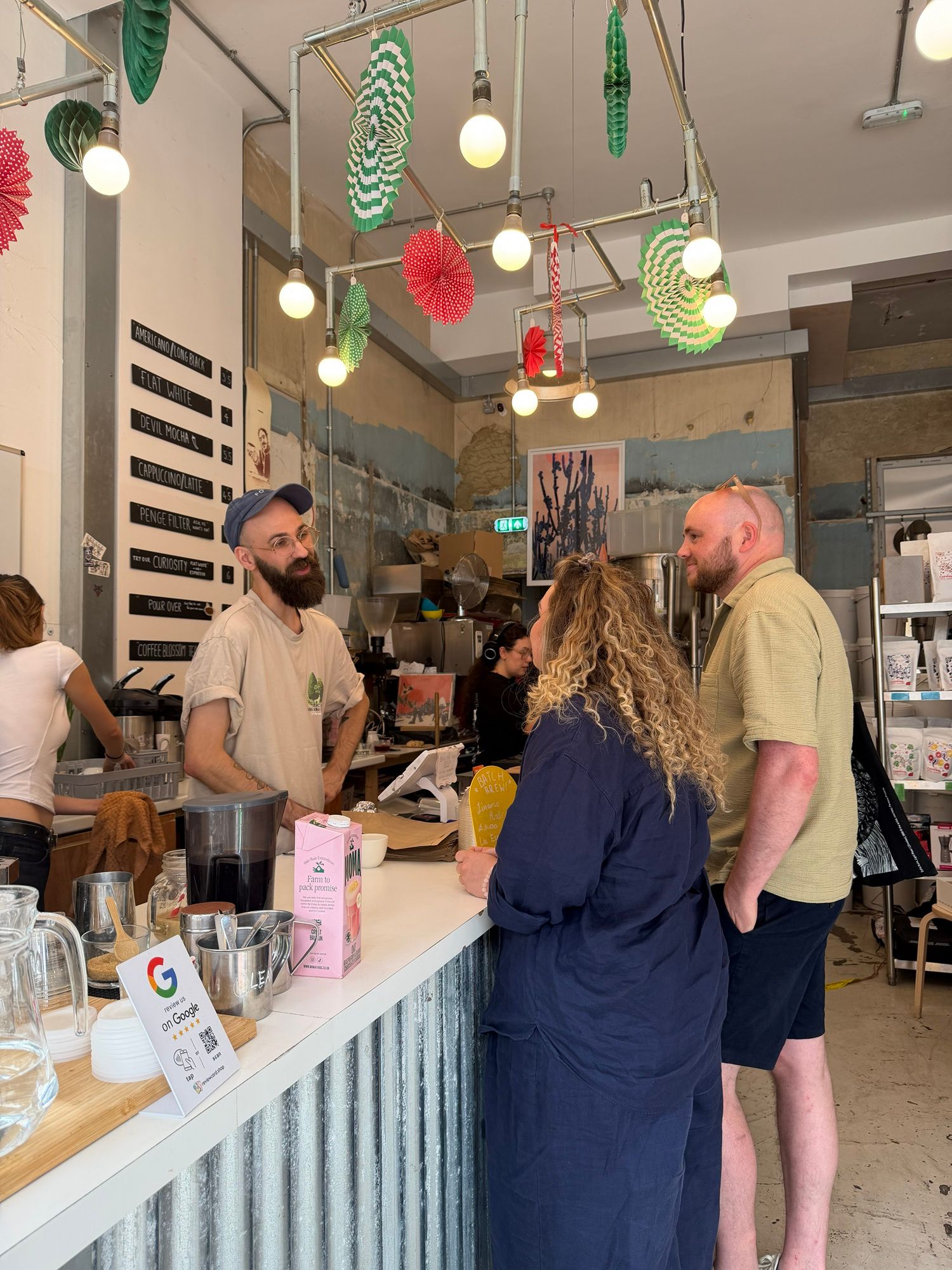 Ezel's reasoning is commercial, not sentimental. Customers come for a good flat white at a fair price, and the social mission only holds if the coffee stands on its own first.
Quality, price and convenience come first. Treat the social mission as the bonus, not the sales pitch.
The same logic runs through Finch, a north London nonprofit cafe founded by Jenny Rainsford, founder of the business and an actress best known for playing Boo in Fleabag. Finch pays its staff first, then uses what is left to train young people who cannot get work, with around 30 trainees passing through alongside six paid staff. Both businesses offer, in practice, a real answer to how to become a barista for people the trade usually overlooks.
Treat the community as the product and the hiring, the training and the welcome stop reading as overheads. They become the thing customers are buying into.
What does “everyone is welcome” really mean in practice?
Inclusion is easy to claim and harder to run. Mhairi Mackenzie, owner of Press by Isle of Bute Coffee, was the first to bring specialty coffee to the island and runs the room as somewhere people can change who they are without it being remarked on.
It's just making everybody just feel like they're allowed to be whoever they want to be within that space.
Mackenzie extends the same freedom to her staff, on the principle that a team allowed to be themselves makes customers feel the same. That is a hiring and management decision, not a poster on the wall.
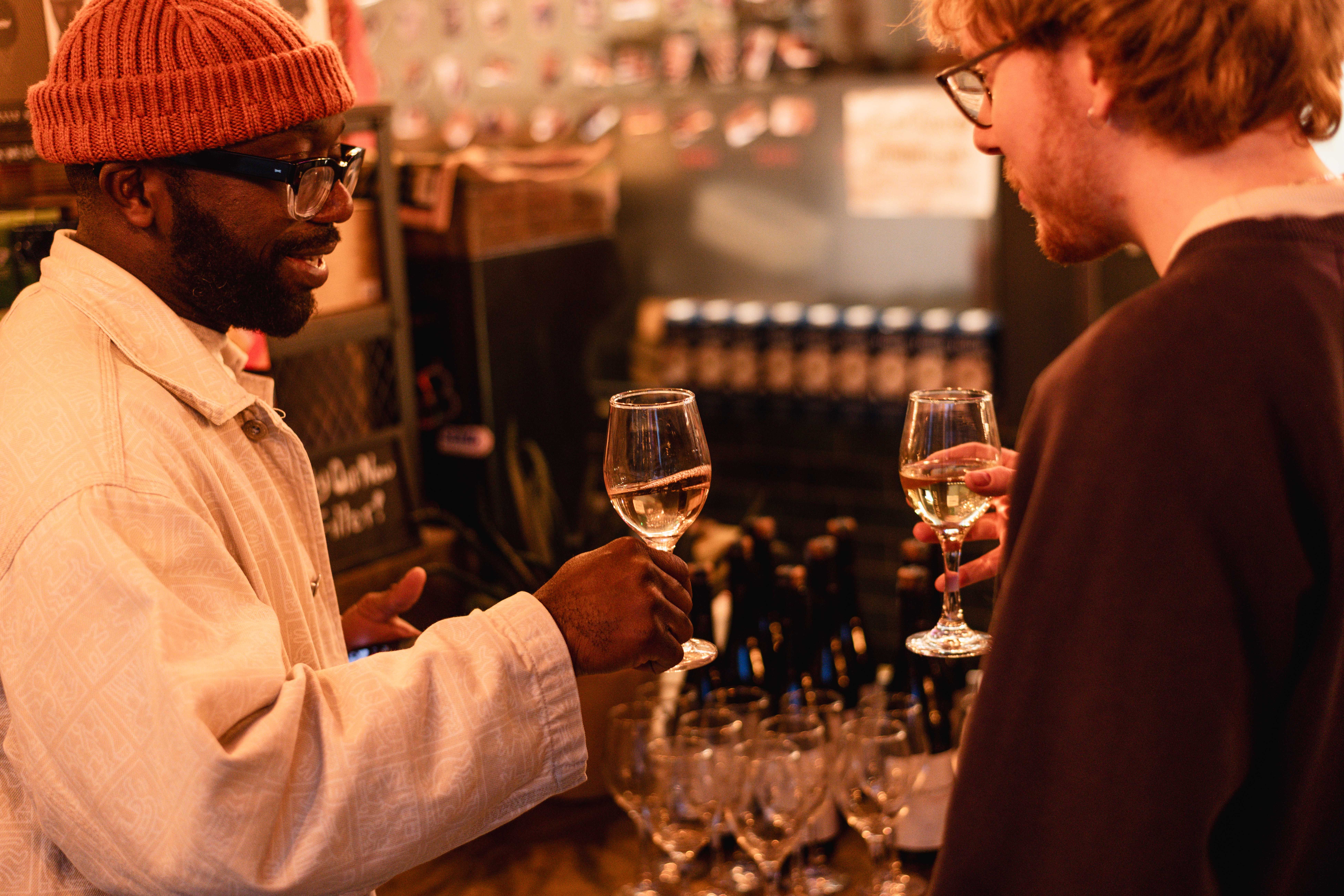 The operators who do this well treat community as a run of deliberate choices, not a happy accident. Five patterns recur across the three sessions.
- Run small, specific events, not broad ones. Martin tried a free tea and coffee morning open to everyone, and nobody came, because an event for everybody is an event for no one. The formats that worked were niche, from a quiz to a games night to a tasting.
- Hire people who connect people. Cromwell describes her baristas as matchmakers who clock which regular would get on with which and make the introduction.
- Buy local and let the effect compound. Mackenzie took pastries from a returning islander whose baking grew popular enough to open her own premises, which then freed space for the next local supplier.
- Use the room beyond opening hours. Maddock turned Through the House into a venue for resident DJs, live music and yoga, so there is always a reason to come in that is not only the coffee.
- Learn to say no. Taylor and Maddock both warned that an owner with finite time has to refuse some requests, from gift vouchers to space hire, or the quality of everything slips.
Broad events that try to please everyone draw no one. Small, specific events build the regulars who become the community.
The common thread is intention. Each of these is a decision an owner makes on a Tuesday, not a line in a values deck.
Can a community coffee shop survive the cost squeeze?
The harder question is whether any of this pays. Rainsford is candid that Finch, despite its non-profit model, public goodwill and her own profile, is not sure it breaks even. She points to VAT, business rates and the strain of trying to pay the London Living Wage, and to smaller costs that mount up, such as nearly £1,000 a year for a licence to put seats on the pavement.
What helped her open at all was not capital but advice. When she researched the trade, established operators took her business plan apart and rebuilt it for nothing.
And what I learned very quickly is that coffee is an incredibly friendly and collaborative industry.
 Rainsford's experience points to a defence the chains do not have, a network of independents who help one another rather than compete to the death. Martin is clear-eyed about that threat.
He argues the big chains are not neutral neighbours but want the independents' space for themselves, and that the answer is not to copy them but to offer what they cannot, a room where the staff know your name.
Distance does not dilute this. Mackenzie carries the extra burden of seasonal, ferry-dependent staffing on an island, where there is no back-up rota when a cruise ship docks, and still treats training her own people as the long game. Taylor describes the wider Scottish scene as collaborative rather than cut-throat, operators who recommend each other because lifting one lifts all of them.
For anyone running the numbers, the lesson is not that community replaces a viable model. It is that, once VAT, rent and wages are accounted for, loyalty built over years is the asset a better-funded competitor down the road finds hardest to copy.
What this means for cafe operators
- For independent owners: before adding a loyalty scheme or a discount, name your three most frequent regulars and what you actually know about them. Relationship depth retains better than a points card.
- For anyone about to open: pressure-test the business plan with operators who already run cafes before signing a lease, as Rainsford did, rather than after.
- For wholesale-led and roastery operators: treat the cafe as the community shopfront for the wider business, the way Change Please and Cairngorm Coffee Roasters do, not as the sole profit centre.
- For multi-site or scaling operators: decide in advance which requests you will decline, so events and hires that do not fit never erode the core offer.
- For operators under cost pressure: model VAT, business rates and wage costs into pricing before chasing footfall, because volume at the wrong margin deepens the problem.
FAQ
What is a third space coffee shop?
A third space is somewhere that is neither home nor work, where people gather informally and feel they belong. A third space coffee shop is a cafe that earns that role through regular, personal contact, so customers treat it as part of their routine rather than a transaction.
How do you build community in a coffee shop?
Through deliberate, repeated choices: small niche events rather than broad ones, staff who know regulars by name and introduce them, local suppliers, and use of the space outside trading hours. Festival operators were clear that it is built over months, not launched.
Can an independent coffee shop compete with chains like Costa and Starbucks?
Yes, but not by imitating them. Maple Park Cafe's David Martin argues independents win by offering what the chains cannot, a room where staff know the customer, while matching the chains on quality and consistency.
How much does it cost to run a coffee shop in the UK?
There is no single figure, but operators at the festival named VAT, business rates, wages at or near the London Living Wage and licences such as pavement seating as the pressures that decide viability. Several said the model only works once those fixed costs are priced in honestly.
What did the speakers recommend for opening a community coffee shop?
Research hard with existing operators, never compromise on the quality, price or convenience of the coffee, and build for a specific group of people rather than everyone. Change Please's Cemal Ezel framed social impact as the bonus on top of a product that already stands up.
Conclusion
The temptation, reading three sessions about community, is to file it under sentiment. The operators themselves would not. When a social enterprise spanning eight countries, a seatless coffee hatch in Orkney and an actor's nonprofit in Finchley all reach the same conclusion, that the room and the relationships are the product and the coffee is the way in, the third space stops looking like a nice idea and starts looking like the most defensible asset an independent has. To follow how these operators and others shape the 2027 programme, join The London Coffee Festival mailing list.
About the speakers
Founder and co-CEO, Change Please Coffee
Ezel has spent more than a decade building Change Please from a single idea into a social enterprise operating across eight countries, using coffee to train and employ people out of homelessness. He speaks with authority on running a values-led coffee business at commercial scale.
Owner, Carnival Coffee Roasters
Cromwell runs a roastery and coffee shop in southeast London that won The London Coffee Festival Community Award, built explicitly around being a neighborhood gathering place. Her perspective is that of a hands-on independent operator.
Owner, Maple Park Cafe
Martin has run Maple Park Cafe, set in the grounds of a crematorium in Thirsk, for four years, serving around a thousand families in that time. He speaks to the realities of community hospitality in an unusual and emotionally demanding setting.
Co-founder, 12th Man Solutions
Reeder chaired the community panel at the festival. She brings a facilitator's overview of how independent operators are thinking about their role beyond the cup.
Community manager, Cairngorm Coffee Roasters
Sandlan leads community and wholesale for an Edinburgh roaster and convened the Scottish panel, giving him a wide view of how cafes across Scotland connect with the places they serve.
Co-owner and Operator, Through the House
Maddock runs a multi-roaster coffee shop at Glasgow Cross built around music and events, and speaks to building an urban community space from a standing start.
Owner, Movement Coffee
Taylor brought specialty coffee to Orkney and runs it as a fixture of island life, giving him a clear view of community and supply at the geographic edge of the trade.
Owner, Press by Isle of Bute Coffee
Mackenzie was the first to introduce specialty coffee to the Isle of Bute and is developing the site into a wider creative space, and speaks to inclusion and operating in a small, seasonal community.
Head of Communications at The London Coffee Festival
Rigali interviewed Jenny Rainsford at the festival and is a recurring host of London Coffee Festival sessions.
Founder, Finch
An actor known for Fleabag, Rainsford founded the north London non-profit cafe Finch and runs it as a training space for young people, speaking candidly about the financial reality of opening an independent cafe.
)
)
)
)
)
)
)
)
)
)
)
)
)
)
)
)
)
)
)
)
)
)
)
)
)
)
)
)
)